Halloween Party Games for Adults: Easy Indoor Ideas
A relaxed indoor plan with twelve friendly questions, volunteer charades and six ghost-story starters. Pick a short round, keep it optional and leave room for conversation.
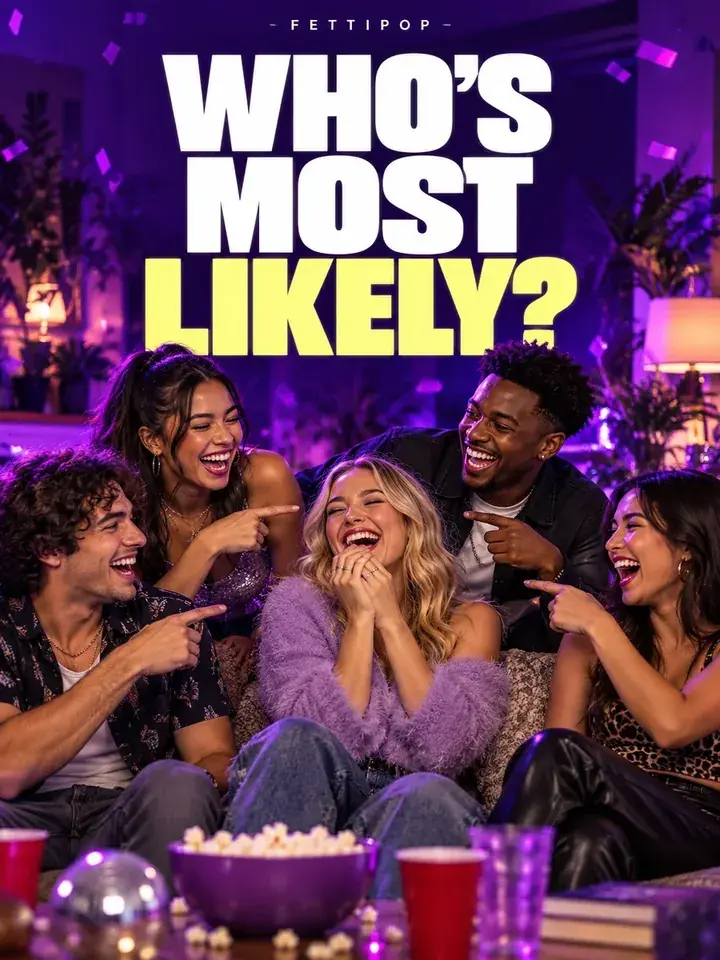
Choose a game that fits the room
For easy indoor Halloween party games for adults, start with a spoken warm-up, offer volunteer charades, then finish with a short story. You can do all three without costumes, printed cards or drinking rules. The plan below includes twelve original questions and six story starters you can use right away.
These are friendly homemade activities for adults together in one room. A guest can answer, guess, watch or pass. The spooky theme comes from the prompts, not from jump scares, personal secrets or making somebody the joke.
Read two or three “Who would…?” questions. There is no running score to catch up on.
Offer charades. Guests who prefer to stay seated can guess.
Build a one-sentence ghost story. Keep each contribution short.
Answer the questions as “Which of us…?” and take turns acting and guessing.
A flexible 30-minute Halloween game plan
Use these times as a host’s suggestion, not a countdown you have to finish. For four to eight people, allow roughly five minutes for questions, ten for charades and ten for a story, with a five-minute break wherever it helps. With a larger gathering, use separate small circles so turns stay short; this does not change the player limits of any browser demo.
- Set the tone. Say, “Everything is optional. You can guess without acting, and pass without explaining.” Ask whether people prefer silly spooky scenes or ordinary autumn prompts.
- Start with four questions. Pick from the list below. Let the conversation finish before reading the next one.
- Offer a change of pace. Invite a volunteer to act, or go straight to the seated story if nobody wants to perform.
- Finish a complete round. Ask whether people want another activity, snacks or time to talk. Avoid a surprise final round that becomes another half hour.
Leave enough light to read and move comfortably. Clear a little space for gestures; nobody needs to run, climb or use props. A phone is useful for reading prompts or timing a turn, but the spoken games can also run from memory.
Game 1: twelve friendly Halloween questions
For three or more. Read a question, count to three and let willing players point to someone who is comfortable joining in. A person may nominate themselves, choose a fictional character or pass. There is no winner and nobody has to defend a nomination. With two people, answer as a conversation instead.
- Who would offer a lost ghost directions before realizing it can walk through walls?
- Who would bring extra snacks to a midnight meeting of monsters?
- Who would teach a nervous skeleton a very simple dance?
- Who would ask the haunted house whether it has a guest Wi-Fi password?
- Who would give a vampire a tour of the neighborhood’s best night cafés?
- Who would repair a witch’s broom and add a comfortable seat?
- Who would organize the pumpkin patch by personality instead of size?
- Who would name a tiny spider and appoint it head of decorations?
- Who would bring a flashlight with enough spare batteries for everyone?
- Who would invite the mysterious figure at the window in for a board-game explanation?
- Who would make a friendly map of the maze before the group sets off?
- Who would turn the spooky soundtrack down so everyone could hear the conversation?
Choose the questions your group finds warm rather than embarrassing. If a nomination feels uncomfortable, move on immediately. These twelve questions are manual article material; they are not loaded into the Who’s Most Likely demo, which offers a small sample bank and eight questions per round for three or more people.
Game 2: a volunteer Halloween charades round
For two or more. One person acts silently while the others guess. Only the actor sees the prompt. For a simple homemade version, agree on 45-second turns, one point per correctly guessed scene and unlimited skips with no penalty. Those are suggested house rules, so you can also play without a timer or score.
Try a ghost untangling headphones, a witch parking a broom, a skeleton checking a wristwatch or a werewolf trying to whisper. Accept a clear equivalent instead of insisting on every word. “Ghost with tangled earbuds” is close enough to the first scene.
For a full bank organized by difficulty, use our 40 Halloween charades prompts for adults. Keep that page facing the actor; putting the answers on a shared TV spoils the guessing. A guest can stay on the guessing side for every turn.
Game 3: a ghost story, one sentence at a time
For two or more; no materials needed. Choose a starter below and invite each willing person to add one sentence. The story is fictional: do not work somebody’s real fears or private experiences into it. After one trip around the circle, the next volunteer gives the story a friendly ending. Passing simply moves the turn along.
- The ghost in the kitchen had left a very polite note about the missing cookies.
- At midnight, every pumpkin on the porch asked for a different radio station.
- The haunted elevator refused to move until someone told it a terrible joke.
- A tiny dragon arrived at the door carrying an invitation for the wrong house.
- The witch’s broom had taken a day off and sent a bicycle in its place.
- Our mysterious visitor was invisible, but their squeaky shoes gave them away.
For a new group, keep it to one sentence each and avoid correcting the plot. If a detail changes, use it as the next character’s misunderstanding. With two people, alternate six sentences and make the seventh the ending together. The aim is a finished little story, not an acting test.
Make the plan work for your guests
For an office gathering: replace pointing at coworkers with naming imaginary characters. Keep managers and personal workplace stories out of the jokes, and let people watch without joining. For a seated dinner, start with the story so nobody has to leave the table.
For a quiet room: take guesses in a turn order instead of shouting over one another. If a time limit makes the activity awkward, use one scene per turn. For people who do not know one another, ask what a fictional friendly monster would do rather than who in the room is most likely to do it.
Without a Halloween theme: swap the ghost for a sleepy neighbor and the broom for a bicycle. The same short format still works. For more choices, our party games for adults guide explains the four free demos, while games for small groups helps you choose by headcount.
A free demo if you want ready-made turns
Act It Out is a free browser charades demo for two or more people in one room. It has 45-second turns, correct-guess and skip buttons, pause/resume and eighteen sample prompts. Its prompts are general scenes, not a Halloween pack, and you cannot import the article’s prompts into it.
Try the demo as a general warm-up, then switch to the manual Halloween material if you want the theme. For secret-word play instead, Undercover supports three to eight people passing one device privately; turn off screen mirroring before showing secret words. Nothing here requires an account, a purchase or an online room.
Warm up with a free round.
Act It Out · 2+ people · 45-second turns. Eighteen general sample prompts; the article’s Halloween material is separate.
See the rules & playGood to know
Do these Halloween games need props or costumes?
No. The questions and stories are spoken, and charades uses imaginary objects. A phone can hold the prompts and an optional timer. Costumes and printed cards are not required.
Can two adults use this plan?
Yes. Answer the questions as a conversation, take turns acting and guessing, and alternate sentences in a short story. The separate Who’s Most Likely demo is for three or more.
Are the Halloween prompts included in the free demos?
No. The article’s themed questions, scenes and story starters are manual materials. FettiPop’s four demos have their own small sample banks, not a seasonal pack.
Original FettiPop host materials. Act It Out details checked October 30, 2026. Themed article prompts are manual materials, separate from the demo sample bank.